

In 2025, the Israeli-Palestinian-Jordanian non-governmental organization EcoPeace Middle East developed the concept of a "Peace Triangle" for the entire West Asian region. This initiative builds upon a memorandum dated September 9, 2023signed by the USA, India, Saudi Arabia, the UAE, France, Germany, Italy, and the EUwhich envisions a new trade corridor extending from India, through Israel, to Europe. Change through trade? An idea conceived prior to the current warsnow proposed as a solution for peace and climate stability in the wake of all the violence and destruction?
EcoPeace Middle Eastis the only Israeli-Palestinian-Jordanian non-governmental organization (NGO) that seeks to achieve lasting peace in the region through the protection of shared natural heritage. Its latestproject (July 2025)is titled "IMEC Peace Triangle: An EcoPeace Strategy for Peace in the Middle East, Shared Prosperity, and Inclusive Resilience." The NGO views the IndiaMiddle EastEurope Economic Corridor (IMEC) as an opportunity for sustainable peace in West Asiaparticularly among Israel, Palestine (including Gaza), and Jordan.
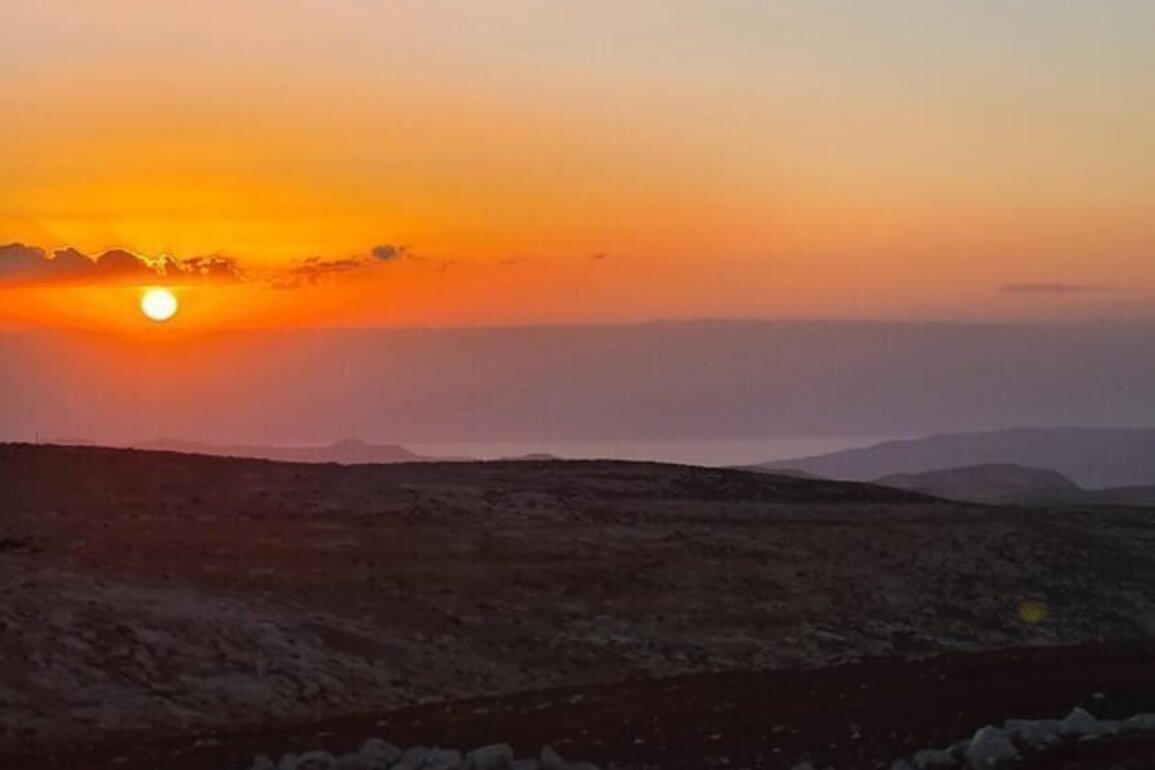
Dead Sea, view from Kisan
The IMEC Memorandum of Understanding, agreed upon on September 9, 2023, at a G20 meeting, outlines a trade corridor extending from India through the United Arab Emirates (UAE) and Saudi Arabia to the Israeli hub, and continuing onward to Europe. The agreement was initiated by the United States and signed by India, the U.S., Saudi Arabia, the UAE, France, Germany, Italy, and the EU. One month later, its implementationstalledat least initiallydue to the Hamas attack on October 7, 2023, and the ensuing war in Gaza; working groups were originally scheduled to draft a timeline and assess investment requirementswithin 60 days, with financing and infrastructure development slated for realization in 2024.
The Four Pillars of the Peace Triangle Aspect within IMEC
From a geopolitical perspectiveaccording to EcoPeaceIMEC is intended to serve as a viable, irreversible pathway toward a Palestinian state, while simultaneously bolstering relations between Israel and the Arab states through an expansion of the Abraham Accords. To this end, both Haifa and Gaza have been designated as ports. Goods are to arrive by rail and be transshipped onto vessels bound for Europe.
This fundamental concept aligns with both Netanyahus "Gaza 2035" planunveiled in May 2024and the plan presented by Trump in early 2025, specifically the provision that Gaza should be equipped with a seaport. However, the EcoPeace proposal does not explicitly clarify why the realization of this objective would necessarily require the existence of an autonomous Palestinian state; to date, Israel has insisted on maintaining continued military control over Gaza, whereas Trump, for his part, has indicated a willingness to envision a takeover of the territory. Saudi Arabia remains the sole party to exercise restraint regarding its participation, having made the establishment of a Palestinian state a prerequisiteat least in order to appease pro-Palestinian sentiment within its own borders and across the wider Arab world. This hesitation may also stem from the fact that such involvement could potentially compete with the Kingdoms own "Saudi Vision 2030"an initiative aimed at weaning the country off its dependence on oil through various projects, including those in the renewable energy sector.
The economic pillarentails forging a link between wealthy European states, the State of Israel, and the Gulf states on the one hand, and struggling Arab economies on the other. Companies from the wealthy nations are encouraged to investthereby funding the reconstruction of Palestine (particularly Gaza), Syria, and Lebanonin a manner intended to render grants and donations superfluous. This clearly demonstrates a reliance on a "trickle-down" effectthe classic principle of a neoliberal market economy: the private sector invests and generates profits, which in turn creates jobs and, consequently, consumers with purchasing power.
An example from the Occupied Palestinian Territories serves to illustrate the feasibility of this approach: In Kisan (20 km south of Bethlehem), Israel authorized the construction of a landfill intended to serve the entire southern West Bank, subject to the condition that illegal Israeli settlements be permitted to dispose of their waste there as well. Two firmsone Palestinian and one foreignresponded to the tender; the latter was awarded the construction contract. A second landfill near Kisan is operated by the Israeli company Elidori Green; the operational machinery was supplied by various entitiesincluding the Canadian firm McCloskey Internationalwhile the trucks were provided by Volvo (Sweden). Construction debris from West Jerusalem is disposed of at this site; the wind frequently carries the resulting dust particles (some of which are toxic) toward Kisan, visibly coating the vegetation and causing respiratory ailments among the local population.
Israeli landfill for Israeli construction debris located near the Palestinian village of Kisan.
In 2022, the mayor went to the landfill with his sonthen about eight years oldto lodge a complaint and suggested using water to mitigate the dust pollution. In response, the manager dispatched military personnel to the mayor's private residence to arrest him. As the mayor was not at home, they summarily took the young boy into custody until his father turned himself in; the father was then interrogated for six hours on charges of endangering Israeli security.
IMEC is neither contingent upon the establishment of a Palestinian state, nor would it guarantee that the Palestinian economy could generate a robust, independent Gross National Product. Moreoveras the example in Kisan demonstratesenvironmental projects can benefit or harm Israelis and Palestinians in disparate ways, creating an injustice that holds the potential not for peace, but for conflict.
From an ecological standpoint, EcoPeacethrough the IMEC initiativefocuses on creating a healthy Water-Energy-Food Ecosystem (WEFE).
In the long term, solar energy is to be harnessed in the desert regions to power seawater desalination plants located along the eastern Mediterranean coast. Saudi Arabia and the UAE can diversify their economies and, over the long term, produce green hydrogenboth for the region itself and, via the IMEC route, for Europe.
Currently, water remains entirely under Israeli control; water supply is managed by the state-owned Israeli water utility Mekorot. In the occupied Palestinian territories, the Israeli Military Order of 1967 remains in force, stipulating that Palestinians no longer have access to aquifers, lakes, or riversincluding the Jordan Riverwithout a permit from the Israeli military administration. Consequently, they are compelled to purchase their own water from Mekorot. Water has thus been transformed into a commodity.
As a result, future food production will be limited to those who can afford to purchase water for irrigationregardless of whether that water is drawn from groundwater sources, recycled, or produced in seawater desalination plants.
According to the UN, only 1.5% of agricultural land in Gaza is currently accessible; the extent of its contamination remains unclear. In the West Bank, nearly all agriculturally utilized land is situated within the occupied Area C territories (which comprise approximately two-thirds of the territory, as defined by the 1994 Oslo Accords). A significant portion of Area C has been designated as military zones or nature reserves, thereby depriving Palestinians of opportunities to earn a livelihood. It is on this Palestinian land within Area C that Israeli settlements are being constructed; settlers displace Palestinian shepherds and farmers, destroy their cropsparticularly olive harvestsand are themselves able to produce goods, even for export, thanks to the ample water resources available to them.
Given the capitalization of water and the progressive Israeli appropriation of land in Palestine, there appears to be little hope for a just transition to an ecological economy.
Regarding security, EcoPeace draws a parallel between European securitywhich emerged in the post-war era from coal and steeland the situation in West Asia: cross-border projects, financed by investors from European and Gulf states, are intended to serve national security interests. The connectivity of states at risk of conflict, the organization argues, relies on (substantial) investment, implying that success can only be achieved through cooperation.
This may well apply to states: between France and Germany, there has been no war since 1945a reality reinforced by the 1963 Treaty of Friendship and their shared membership in the European Union. However, in the context of the Middle East, such an absence of open conflict presupposes the establishment of a Palestinian state, thereby enabling two distinct states (much like France and Germany once did) to enter into treaties with one another.
EcoPeace employs the term "security," which denotes a nation's protection against external threats. For Palestinians, however, the issue alsoor perhaps primarilyrevolves around "safety." "Security" proceeds from the premise of two nations engaged in mutual hostility and warfare, with the conflict ultimately sealed by a treaty. "Safety," conversely, encompasses the protection of every individuala daily existence free from physical assault, a guaranteed livelihood, and future opportunities for one's children. To ensure "safety," the land question, above all else, must be resolved. At issue is the Palestinian land that has been expropriated, occupied, and *de facto* annexedand increasingly subjected to illegal Israeli settlementsince 1948 and 1967, respectively. Ultimately, the freedom and existential security of the Palestinian people constitute the indispensable foundation for the security of both Israelis and Palestinians alike. The Peace Triangle concept, by contrast, relies on the mechanism of (primarily private) economic measures.
A Peace Triangle Through the Export of Renewable Energy
First, the focus lies on the export of renewable energy from West Asia to Europe. Green hydrogen is produced through a process known as water electrolysis. In this process, water is split into hydrogen and oxygen using (a substantial amount of) electrical energy derived exclusively from renewable sources (such as wind or solar power).
Northwestern Saudi Arabia (theNEOMproject), southern Jordan, and Egypts Sinai Peninsula are considered a "sunrise region"an area where, according to a study by Qamar Energy (based in the UAE), the greatest potential for solar and wind energy development in the entire Mediterranean basin is believed to exist. The project could meet the entire energy demand of Jordan, Palestine, and Israel, as well as 30% of the demand across the region stretching from Greece to Germany. The study demonstrates the feasibility of producing and exporting green hydrogen via key hubs to Cyprus, Greece, and Italy (specifically Brindisi and Trieste), and onward to Austria (Graz) and Germany (Munich).
According to EcoPeace, this undertaking would act as acatalyst for peacedriven by the scale of investment, its contribution to climate resilience, its return on investment, and the integration of the Middle East/West Asia with Europe. "The study highlights the endeavours bankability through the return on investment. Not less important, through a Peace Triangle design adding Gaza as an export node - in addition to Egypt and Israel - this project transforms geo-political and security considerations, contributing to a pathway to a Palestinian State and Israeli-Saudi normalization. As a priority investment, advancing the Crete-Cyprus-Israel electricity interconnector would set an important precedent that gives the confidence needed to the private sector to move forward on much larger interconnectors from the Sunrise Region to Europe. " Furthermore, it would bolster confidence within the private sector.
Qamar Energy was founded in 2015 by its current CEO, Robin Mills. He had previously worked for Shell (a British multinational oil and gas company), among others; he speaks Farsi, among other languages, and is considered Shells expert on Iran. The consultancy firm assesses feasibility and return on investment;Qamar Energysays, it covers all sectors of the energy spectrum, from the extraction, transport, and processing of hydrocarbons to alternative energies, renewable energies, unconventional energy sources, power generation and supply, and electricity. Mills authored the study back in 2012 (shortly after the overthrow of Gaddafi in Libya in 2011) with the aim of identifying another region that could compete with North Africa as a source of green hydrogen. In Morocco, construction on the massive Noor Ouarzazate solar complex has been underway since 2013, with Noor I becoming operational in 2016.
Through its "Peace Triangle" initiative, EcoPeace places its bets on the idea that massive private investments from around the worldcombined with the resulting interdependencies among the stakeholderswill guarantee security for both the State of Israel and a future State of Palestine. The question remains, however, whether the establishment of a Palestinian state is, in fact, a prerequisite for such investmentsor whether it would suffice for international companies if the region were simply "pacified," and if an additional transshipment port were constructed in Gaza to complement those in Egypt and Israel.
However, a prerequisite for such an economic zone in Gaza is the "elimination" of what previously existed there: the homes of the Palestinian people. As a result of the war that began on October 7, 2023, this destruction has now largely been accomplished. In late May 2026,Netanyahuinstructed the army (IDF) to gradually bring additional land in Gaza under its control. Theceasefire agreement of October 2025had covered 53% of the Gaza Stripan area from which the IDF was, in fact, supposed to gradually withdraw. Instead, military control is now being expanded from 60% to 70%. The organizationForensic Architecturefounded by the British-Israeli architect Eyal Weizmanis documenting this ongoing process of land appropriation and the displacement of Palestinians using maps and aerial imagery. Since 2020,Eyal Weizmanhas been banned from entering the United States, on the grounds that he poses a security threat.
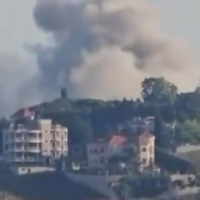
The 70% of seized land (which Israel refers to as a "security zone") is situated along the eastern borderan area once dominated by agricultural fields that rendered Gaza largely self-sufficient. No Palestinian is permitted access to this area any longer, while everything within it is being razed to the ground. Is this being done to make way for future solar farmsor for some other purpose? At this juncture, one must also ask why Israel is nowostensibly for the sake of security against terrorist attacksalso emptying southern Lebanon of its inhabitants, spraying glyphosate (thereby rendering healthy agricultural use impossible in the long term), and creating a *tabula rasa* through systematic destruction.
The current Israeli government completely rejects the establishment of a State of Palestine; the question of who is to assume control in Gaza will, at best, be negotiated in accordance withUN Security Council Resolution 2803of November 17, 2025while, simultaneously, the depopulation of the potential port and industrial zoneclearing it of both people and homescontinues and is being de facto cemented. International companies remain hesitant to commence the so-called reconstruction, as there is no guarantee of a definitive end to the violence in the regionnot only in Gaza but also in Syria and Lebanon. To date, it appears more likely that, rather than fostering interdependence, Palestinians will be excludedor, at best, permitted to remainand will become dependent upon the emerging economic circumstances.
How is a "Peace Triangle" to be created through IMEC? Electrified Railway.
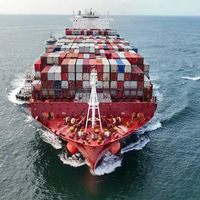
The second element of the Peace Triangle is the construction of an electrified railway extending from Dubai to the Mediterranean coastspecifically to the ports of Egypt (Alexandria), Palestine (Gaza), Israel (Haifa), Lebanon (Beirut), and Syria (Tartus).According to EcoPeace: The IMEC railway to Gaza, Beirut, and Tartus in particular can be the economic engines needed for the rebuilding of these economies, emphasizing the catalytic nature of the investments involved. A priority investment here would be expanding the existing land crossings between Israel and Jordan, and Jordan and the West Bank to accommodate the humanitarian and rebuilding needs for Gaza According to the study by Qamar Energy, initial container traffic of 10 million TEU could be scaled up to 25 million TEU. EcoPeace posits that this process will foster shared prosperity, thereby guaranteeing security andor at leastreducing the propensity for violence.
A fundamental premise of neoliberal economic theory is that increased revenue causes entire national economies to flourishyielding enormous profits not only for the (private) companies involved, but also allowing wealth to trickle down to the general population through job creation. What is overlooked, however, is that international corporations are free to transfer their profits to any other country of their choosing. Indeed, international corporations can often be incentivized to invest only if the state exempts them from taxes and tariffs, or places no restrictions on the repatriation of profits.
By its very nature, a seaport in Gaza would have to be situated along the Mediterranean coast. Yet this is precisely where the 1.9 million displaced Palestiniansout of an estimated total population of 2.1 millionare currently being herded together. Where are they supposed to go, when access to the eastern part of the Gaza Stripan area that has expanded from 53% to over 60%, and now to 70% of the territoryis being denied to them?
On December 26, 2025, Israel became the only UN member state to date to recognizeSomalilandthe province that declared its independence in 1991and to exchange diplomatic missions with it. Somalia suspects that the promised Israeli economic aid is contingent upon an undisclosed agreement: namely, to accept the population of Gaza. To date, Israel has been unable to persuade Egypt, Jordan, or even Saudi Arabia to do so. Instead, what continues to unfold is a situation that the Western world refuses to label as genocide, yet also fails to preventdespite being obligated to do so in accordance with the International Court of Justice (Report: August 1, 2024 August 31, 2025).
The construction of an electrified railway connecting to a port in Gaza must first be preceded by considerations regarding how the people living there can remain in their homeland and how their survival is to be secured.
How is a "Peace Triangle"a triangle of peaceto be established through IMEC? A water-energy exchange?
Thirdly, EcoPeace considers the water-energy exchange to be a suitable mechanism for establishing a "peace triangle." In this regard, EcoPeace builds upon its 2020 "Green-Blue Deal" projecta vision it sees realized in the 2021Israeli-Jordanian-Emirati Declaration of Intent. Under the 1994 Peace Treaty, Israel had already committed to providing Jordan with 50 million cubic meters of water annually. Beginning in 2021, the UAE constructed solar power facilities in Jordan, which now supplies solar energy to Israel; in exchange, Jordan receives an additional 50 million cubic meters of water. It is proposed that this water-energy exchange be fully expanded to include Palestine. Specifically, a seawater desalination plant with an annual capacity of 200 million cubic meters should be constructed in Gazaa facility capable of meeting not only Palestines water requirements but also broader regional needs, including those of Jordan. Israels largest desalination facility,Sorek I, currently produces 625,000 cubic meters per dayequivalent to 228.125 million cubic meters per year. TheIsraeli governmentreports an annual output of 600 million cubic meters of desalinated seawater, a figure it aims to increase by a further 300 million cubic meters per year by 2030.
This raises the question of who would ultimately control a seawater desalination plant located in Gaza: would Mekorot tolerate competition, or would it instead seek to consolidate Israeli control over the water supply for Gaza, Palestine, and Jordan alike? There is absolutely no mention of Palestinian control over the water to be produced by such a facilitynor, for that matter, over the water (which requires restoration) contained within the aquifers lying directly beneath their own feet.
The expansion of theKhan Younis seawater desalination plant(southern Gaza)the largest of its kind, funded primarily by the EU and UNICEF, and inaugurated on January 19, 2017had only been completed in the summer preceding October 7, 2023; it provided 250,000 people (out of over two million Palestinians living in Gaza) with affordable water. On October 9, 2023two days after the Hamas massacre in southern IsraelIsraeli Defense Minister Gallant announced a total blockade of Gaza: "no electricity, no food, no water, no fuel…" In a report dated July 2024, the organization Oxfam demonstrates that Israel is usingwater as a weaponin the war in Gaza. By that time, 80% of water and sanitation facilities had been destroyed, and 94% of the population was forced to subsist on just 4.7 liters of water per person per day.
"The investment here is catalytic as it creates a set of healthy interdependencies," EcoPeaceanticipatesregarding the water-energy exchange. The experience of the current war in Gaza demonstrates that more must be done than simply constructing an even larger seawater desalination plant, and that a "healthy" and "mutual" interdependence is not solely a matter of private investment in technology. Ultimately, it is a question of power: Who controls access to waterwhether through direct access to groundwater or springs, ownership of a desalination plant, or the regulation of water prices?
Opportunities of the EcoPeace Model for Peace in West Asia
EcoPeace Middle East is one of over 170 NGOs within the Alliance for Middle East Peace (ALLMEP) network. On June 3, 2024, together with 200 other civil society organizations, they addressed aletterto the heads of state meeting in Italy for the G7 Summit. The Pope and a number of Members of the European Parliament also signed the appeal calling for the inclusion of civil society in the peace process. Indeed, the subsequentG7 Leaders' Communiqu(p.6) included the following passage: We affirm our commitment to working together and with other international partners to closely coordinate and institutionalize our support for civil society peacebuilding efforts, ensuring that they are part of a larger strategy to build the foundation necessary for a negotiated and lasting Israeli Palestinian peace.
At a special session on September 18, 2024, the United Nations General Assembly decided to convene an international conference to advance UN resolutions regarding the question of Palestine and the two-state solution (Resolution ES-10/24).Resolution 79/81, adopted on December 3, 2024, subsequently established the modalities for the conference and appointed France and Saudi Arabia as its co-chairs. To date, France is the only signatory to the Memorandum of Understanding of September 9, 2023, to have appointed an IMEC envoy tasked with advancing the project.
From February 10 to 12, 2025, Indian Prime Minister Modi was in France for talks. During these discussions, French President Macron described the IMEC corridor as an impressive"catalyst"(the same designation used by Ecopeace six months later). India is one of 50 countries that are not among the approximately 150 states participating in China's Belt and Road Initiative ("New Silk Road"). Consequentlymuch like the EU's Global Gateway InitiativeIMEC is frequently viewed as a counterpart or competitor: an "Anti-Silk Road." TheWhite House(upon the signing of the memorandum) was convinced, that the corridor would offer a physical and ideological alternative to China's own massive infrastructure program.
The first official visitors following Trump's inauguration were Israeli Prime Minister Netanyahu (at Trump's invitation, February 4, 2025), the King of Jordan (February 11), and the Indian Prime Minister (starting February 12, following his visit to France). While Trump, upon taking office, made numerous efforts to roll back initiatives introduced by his predecessor, Biden, he declared at a press conference on February 13 that heintended to revivethe plan for a trade corridor extending from India through the Middle East to Europe. For his part, Modi also visited the UAE and Jordan in 2025 in an effort to get IMEC up and running (once again).
President Macron invited civil society representatives to the Paris Peace Conference on June 13, 2025; over 500 participants attended and adopted the "Paris Call for the Two-State Solution", which was subsequently incorporatedon July 29, 2025by the states working under French and Saudi co-chairmanship into the draft of the "New York Declarationon the Peaceful Settlement of the Question of Palestine and the Implementation of the Two-State Solution." Germany did not actively participate in these preparatory proceedings with high-profile representatives, yet it welcomed the outcome and signed the New York Declaration during the UN General Assembly in September 2025.
On July 24, 2025, Amnesty International issued astatementregarding the Paris Peace Conference, employing significantly stronger language and calling, for instance, for an end to the genocide and for pressure to be exerted on Israel.
EcoPeace welcomed the participation of its seven-member delegation in the Paris Peace Conference, which included Jordanian Director Yana Abu Taleb. Palestinian Director Nada Majdalani spoke on the panel titled "Reconstruction of the Gaza Strip: From Humanitarian Aid to Regional Integration," while Israeli Director Gidon Bromberg co-chairedalongside a colleaguethe working group on the "Economic Viability of the Palestinian State." Both presentations focused on the IMEC Peace Triangle.
While the attacks by Israel and the U.S. against Iranand the ensuing blockade of the Strait of Hormuzhave, on one hand, bolstered the prospects for implementing the IMEC trade corridor and the Peace Triangle variant, Irans retaliatory attacks against the United Arab Emirates, on the other hand, pose a significant hurdle to immediate investment in the infrastructure yet to be constructed. Alternative routes and energy solutions are currently under discussion. However, the primary focus of these discussions is not the establishment of peace or the well-being of the people in the region, but rather economic interestsand, at most, ensuring supplies for the people of Europe (specifically energy and goods not inflated in price by the conflict).
The entire region of West Asia continues to be viewed as a supplier of energyhitherto oil and gas, and in the future green hydrogento meet Western needs. In this context, Israel serves as a European outpost within Europes Near Eastern sphere, rather than merely as one state among others in the western part of Asia. Critics characterize this arrangement as a manifestation of colonial structures.
An Alternative Perspective on the IMEC Route
In anarticle for the Carnegie Endowmentconcerning post-war plans for Gaza, N. Arafeh and M. Turner invoke Naomi Kleins concept of "disaster capitalism." They write: "Moreover, the plans integration with Saudi ArabiasNEOM projectand theIndia-Middle East-Europe Economic Corridorwould transform Gaza into a transit hub designed to facilitate regional capital flows and trade routes that bypass Palestinian economic needs. This integration reflects the thinking behind the broaderAbraham Accords framework, which has enabled regional economic partnerships that marginalize Palestinian demands.
" They view the war in Gaza as yet another instance in which a catastrophespecifically, massive destructionis being leveraged to orchestrate a complete reconstruction, in the spirit of Milton Friedman; they label this phenomenon "disaster capitalism." Whether accidental or deliberately engineered, such a catastrophe creates a *tabula rasa* through destructionan opportunity to rebuild everything entirely anew, unconstrained, by granting absolute freedom to corporations and market mechanisms.
It is worth noting that the Memorandum of Understanding for the IndiaMiddle East Economic Corridor (IMEC) was agreed upon on September 9, 2023that is, prior to the Hamas attack on October 7, 2023and is now being promoted, with the backing of a trilateral Israeli-Jordanian-Palestinian civil society organization known as EcoPeace Middle East, as a sustainable solution to the entire Middle East conflict: peace achieved through international private investment and trade.
Chancellor Merz undertook his first state visit to Prime Minister Modi in India, accompanied by a delegation of 23 CEOs and industry leaders. Theconcluding statement(January 12, 2026) notes: Reaffirming their strong support to IndiaMiddle EastEurope Economic Corridor (IMEC), the leaders emphasized its transformational potential in reshaping and promoting global commerce, connectivity and prosperity. In this context, they look forward to the first IMEC ministerial meeting to take concrete steps for advancing this initiative.
IMECincluding the EcoPeace Peace Triangleconsists of agreements in which the affected Palestinian, as well as Israeli and Jordanian, populations are not consulted.
Deals that disregard the right to self-determination of peoples, as enshrined in the UN Charter.
Deals that deliver neither climate justice nor a JUST peace.
Deals that even present false solutions to the climate crisisfor they consume water and land (belonging to the indigenous population) to an extent that fuels environmental destruction and global warming: here, in SWANA (Southwest Asia and North Africa)the most water-scarce region in the worldgreen hydrogen is produced from water via electrolysis powered by solar energy harvested on "people-free," war-ravaged land, only to be exported out of the region to supply populations in the Global North.
Helga Merkelbach