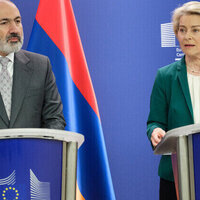



The European Commission is preparing to launch an excessive deficit procedure against Bulgaria, according to official Commission documents. Alongside the fiscal warning, Brussels is also urging structural economic changes, including a reassessment of the country's 10% flat tax system, which it argues lacks fairness in its current form.
One of the Commission's key criticisms is linked to tax progressivity. In its assessment, it states that ?a flat tax of 10% without a tax-free threshold leads to weaker tax progressivity,? suggesting that the system places disproportionate pressure on lower-income groups. The EC argues that Bulgaria should focus on improving the fairness of its tax structure while also strengthening revenue collection and limiting the shadow economy.
The recommendations form part of a broader set of five policy directions for 2026 and 2027, prompted by rising fiscal risks and weaknesses identified in areas such as corruption control, education outcomes, and investment in research and innovation.
Among the fiscal measures, the Commission calls for tighter control over net expenditure growth and increased defense spending, alongside efforts to improve tax compliance and overall fiscal sustainability. It also points to Bulgaria's comparatively low tax revenues within the EU context.
Other recommendations include ensuring continuity of reforms under the Recovery and Resilience Plan, strengthening anti-corruption institutions, improving judicial independence, and increasing efficiency in public procurement and investment management. Brussels also highlights the need to accelerate energy transition policies, reduce dependence on fossil fuels, and address energy poverty through modernization of the energy system.
Education and social policy are also included in the package, with calls to improve educational quality and expand access to integrated employment and social services to support social inclusion.
According to Commission data, Bulgaria's fiscal deficit is projected to rise gradually, from 3% of GDP in 2024 to 3.5% in 2025, with further increases expected to reach 4.1% and 4.3% in subsequent years.
In parallel, Deputy Prime Minister Atanas Pekanov told parliament during a blitz control session that the European Commission has repeatedly emphasized the need for stronger anti-corruption reforms, some of which are tied directly to funding under the Recovery and Resilience Plan.
He noted that one of the central requirements is the creation of an independent anti-corruption body aligned with EU standards. ?Unfortunately, successive governments did not find the political will to establish such a commission,? Pekanov said, adding that delays in reform have resulted in the suspension of around 400 million euros in EU funds.
Pekanov also said that recent legislative changes adopted by parliament are intended to meet EU conditions, potentially unlocking further disbursements. He indicated that following discussions with European Commission President Ursula von der Leyen, approximately 370 million euros could be released in upcoming payments, although additional steps are required before full activation of the mechanism.
At the end of May, lawmakers approved new legislation on combating corruption among public officials, paving the way for the formation of a new anti-corruption commission composed of representatives from parliament, the presidency, and the judiciary.